Lucas Marcos Barquilla
Sculpture
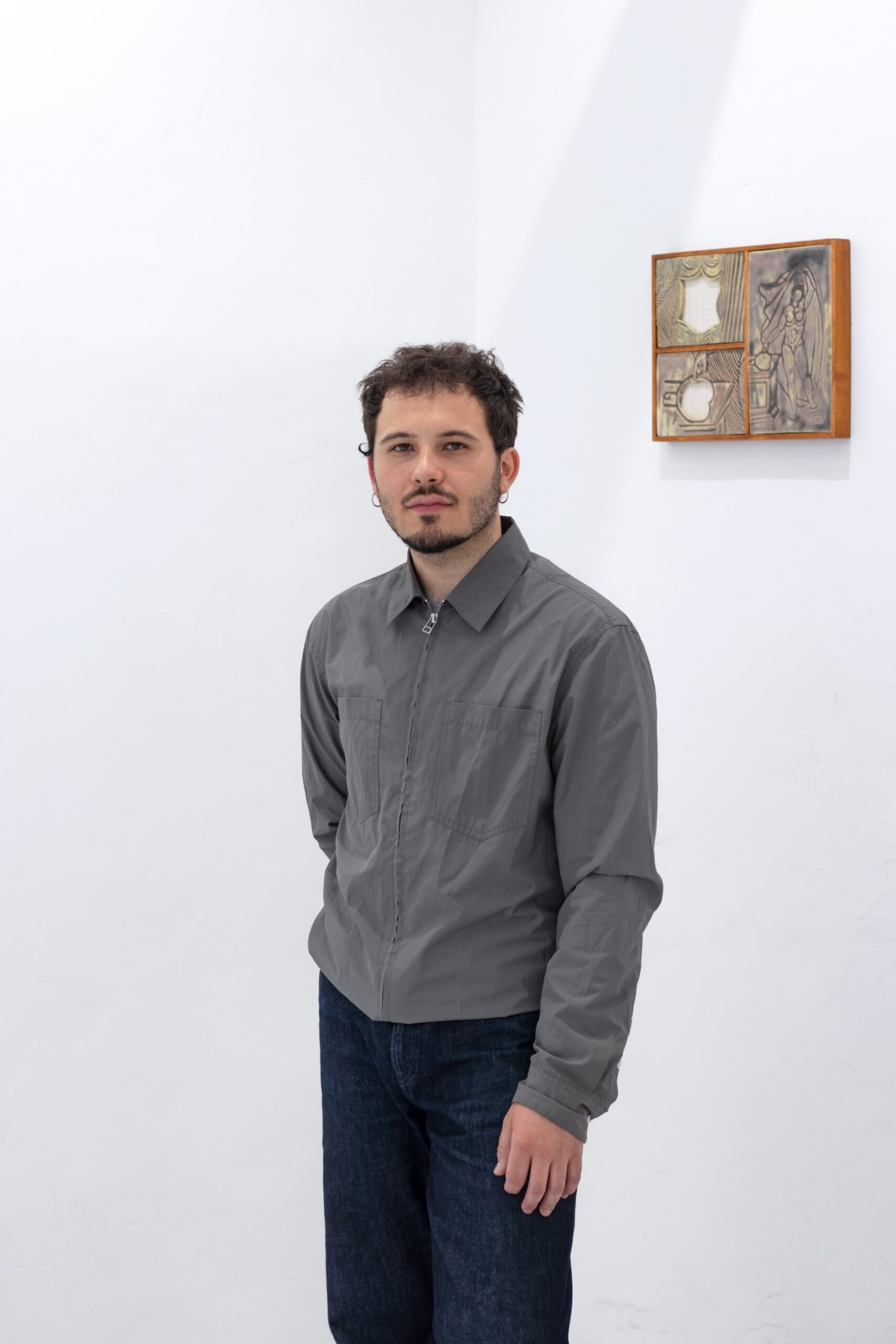
Lucas Marcos Barquilla (Madrid, 1998) is a visual artist and researcher. His work focuses on the study of transformations in the productive structure and how these influence the perception of the body.
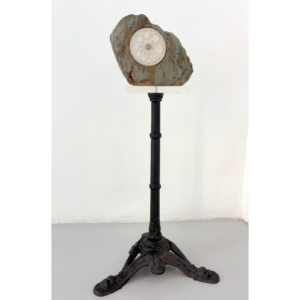
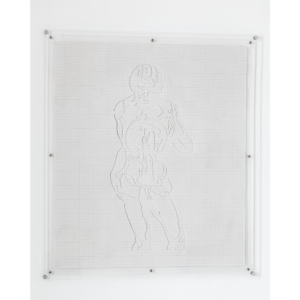
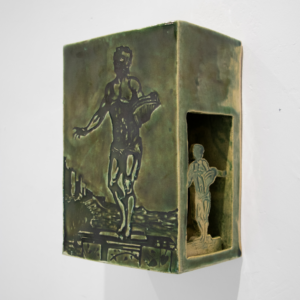
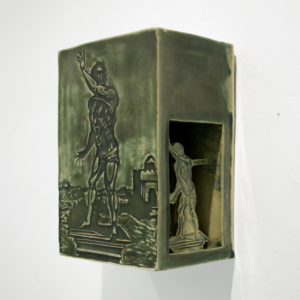
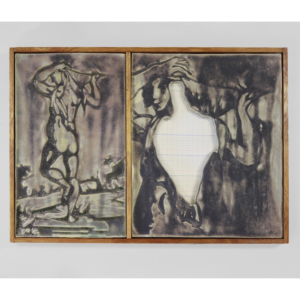
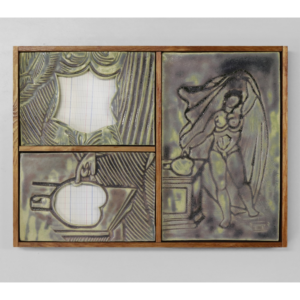
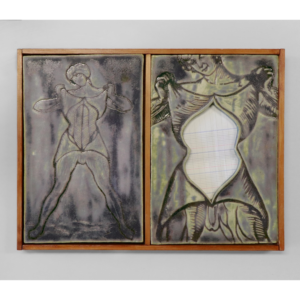
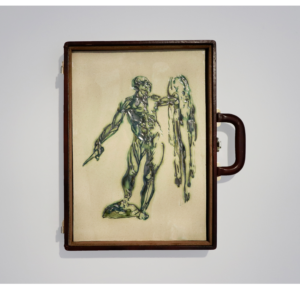
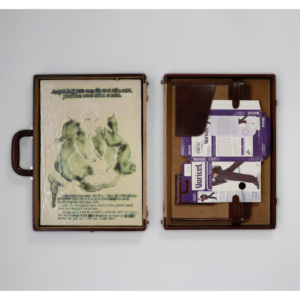
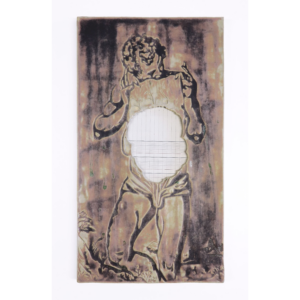
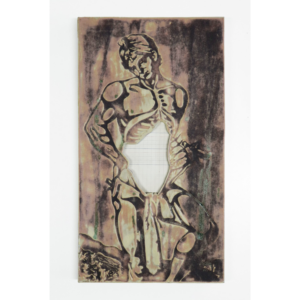
In her work, anatomical, ergonomic, and medical elements coexist, generating sculptural structures or bodies in which notions of support, tension, recovery, balance, instability, fragility, and hardness constantly appear. These languages configure a vast imaginary world from which a material poetics is articulated, in which ceramics acquires a central role as both surface and body: a material that simultaneously preserves, hardens, and fixes form. The ceramic pieces coexist with other elements as parts of a broken, fragmented, and hardened body.
A graduate in Fine Arts from the Complutense University of Madrid, he holds a Master's degree in Contemporary Art History and Visual Culture, taught in collaboration with the Reina Sofía National Art Centre Museum.
He has exhibited his work in institutions, galleries, and spaces such as Sant Andreu Contemporani (Barcelona), the Sala de Arte Joven de la Comunidad de Madrid, Sala Amadís (Madrid), Galería El Chico (Madrid), Espacio Valverde (Madrid), and Malpaís (Barcelona), among others. He has received awards and recognition from competitions such as the Circuitos de Artes Plásticas de la Comunidad de Madrid XXXVI (2025), the Miquel Casablancas Prize (2024, 2026), the WE:NOW Visual Arts Prize (2024), and the Injuve Grants for Young Creators.
Statement
My work revolves around the relationships between body, structure, and material production. Through sculpture and ceramics, I use anatomical, medical, and ergonomic references to construct pieces where the body is permeated by notions of tension, containment, fragility, and resistance.
I am interested in how the body can be understood both as an organism and as a functional structure, and how materials are capable of recording processes of pressure, wear, and transformation. Ceramics occupies a central place in my practice because of its ability to preserve, harden, and fix form, while simultaneously maintaining a physical and vulnerable dimension.